
How Should a One-Piece Swimsuit Fit?
A one-piece should sit close to your body, let you reach and sit comfortably, and keep the coverage you chose without repeated adjustments. If it pulls at both the shoulders and the leg openings, check the torso length before going up a size. If the length feels right, look at where the suit is tight or loose across the bust, waist or hips.
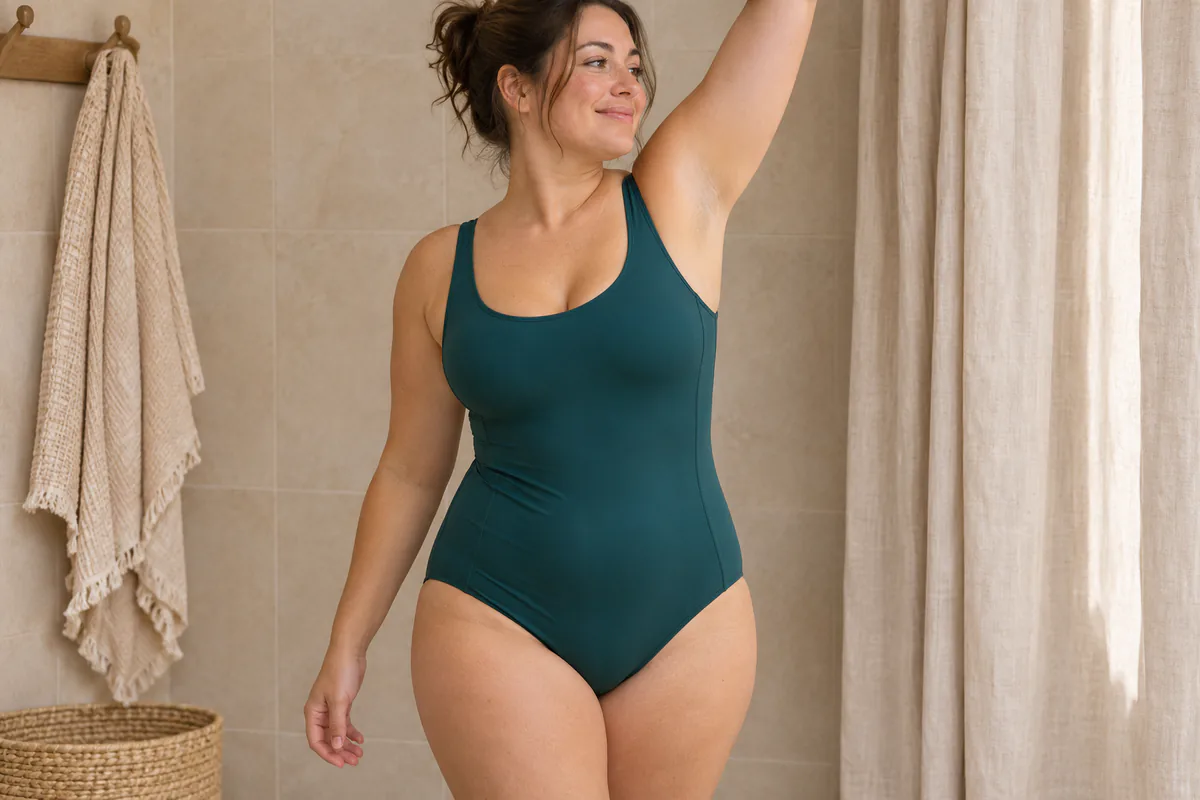
The two-minute try-on test
Try the suit on dry and follow the seller’s try-on instructions. If the straps are adjustable, start at a comfortable setting. Then see how the suit behaves when you move the way you would at the pool.
- Stand and relax your shoulders. Check whether the neckline and leg openings sit where you want them. Notice whether you have to pull the suit down at the hips or lift it at the shoulders to feel comfortable.
- Reach overhead twice. Check whether the straps pull or slip and whether the leg openings shift. Lower your arms and see if the suit settles on its own.
- Sit, then stand or squat gently. Check for pressure at the straps and leg openings and any gaping at the neckline. If you have to readjust the same spot every time, use that as your starting point.
For example, a suit that feels fine across the hips but pulls at the shoulders and crotch as soon as you sit is worth comparing with a longer cut. A suit that feels fine from shoulder to crotch but opens at the neckline when you lean forward may need a different neckline or more bust support.
What pulling, gaping and riding up can tell you
Start with the adjustment that matches where you feel the problem. Several fit issues can look similar, so use these clues to decide what to compare.
| What you notice | What to check | What to try |
|---|---|---|
| Straps dig and the suit pulls upward at the legs | Torso length and strap adjustment. | Compare with a longer cut before sizing up. |
| Neckline gaps when you lean forward | Strap length, bust fit and neckline shape. | Adjust the straps if possible or try a different neckline. |
| One leg opening rides up when you walk | Hip fit and where the leg opening sits. | Try a different leg cut or fuller seat coverage. |
| Fabric bunches at the waist | Whether the excess is vertical or around the waist. | Compare a shorter torso or a cut with a closer waist. |
Compare length and width before ordering
First, check what the brand’s chart measures. For a body chart that asks for a torso loop, follow its measuring diagram. Typically the tape goes from one shoulder, down the front, through the legs, and up the back to the same shoulder. Keep the tape close without pulling it tight. Compare the loop with the same measurement on the chart.
Our one-piece chart uses finished garment dimensions. Lay a suit that fits you well on a flat surface without stretching it, then compare front and side lengths and the armpit, waist and hip widths at the points shown in our swimwear size guide. A body torso loop and a flat front length measure different things.
If sizing up gives you the length you need but adds too much room at the waist or neckline, look for a cut with more torso length. If you’re choosing suits for two people, compare each person’s measurements before selecting sizes from our matching sets with one-pieces.
Common one-piece fit questions
How snug should a one-piece feel?
It should feel close and stay in place as you move. If you feel restricted when you sit or raise your arms, check where the pressure is coming from.
Should I size up for a long torso?
Compare both the length and width in the next size. If the extra width makes the neckline or waist loose, a longer cut is the better fit to try.
Can I choose a size from the model photo?
Use the photo to judge the neckline, leg cut and coverage. Use the chart for the actual style to decide size, since those proportions can sit differently on you.